
THREE READS
SHORT #5


I don’t do this very often because people are already inundated with too many things to read, but this week I came across three of the better posts I have read in a while, so I thought I would share. If you have 15 minutes, read all three. If not, you’ll get the idea from what I have written, especially the last part.
SHARE WEALTH, DON’T DISTRIBUTE IT — Wall Street Journal (Link)
If I told you NVIDIA had 36,000 employees, how many would you guess have net worths today north of $25 million?
1,000? 2,000? 5,000?
What if I told you the answer is more than 16,000 employees?!?
As the author argues, “while democratic socialism is all about taxing successful entrepreneurs and running out of other people’s money, democratic capitalism is all about increasing profit margins, sharing the wealth and growing prosperous together.”
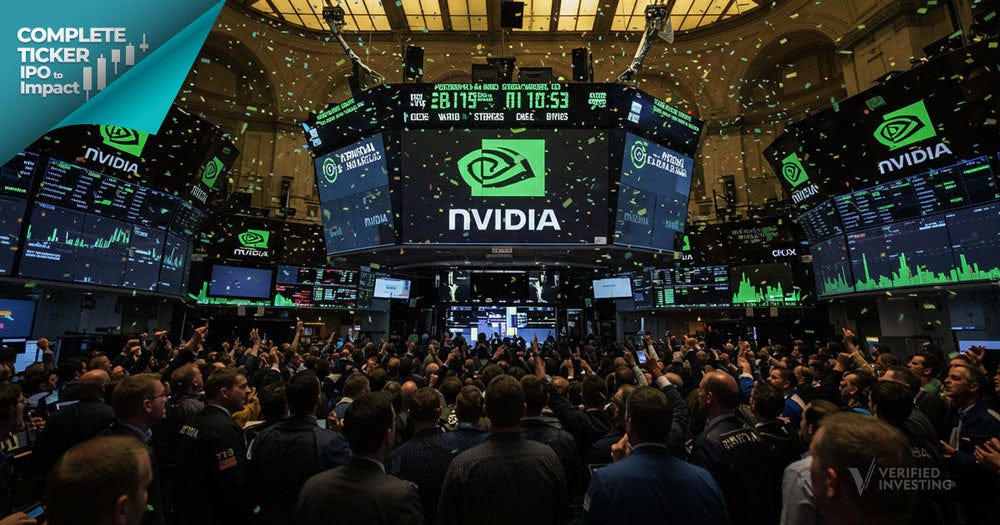
Is NVIDA a rare exception? Sure.
Is he cherry picking the most successful growth story of all-time? Of course.
Yet, this doesn’t mean his point isn’t valid. Afterall, anyone who owns the S&P 500 in a retirement account has benefitted from NVIDIA’s strong performance, both directly through owning a small percentage of its stock (it represents ~30% of the S&P 500’s ~300% gain over the past decade), as well as indirectly through all of the companies that have benefitted from using its chips. More importantly, the author makes a compelling case that the best path to financial sucess for most people comes from “consistently buying shares and stock indexes, usually in the form of automatic contributions from every paycheck, or by receiving bonuses through company stock deals.”
BE THE NAVY, NOT A PIRATE — Andreessen Horowitz (Link)
The author, Ryan McEntush, a partner on the American Dynamism team at Andreessen Horowitz, argues that while pirates break rules, defy empires, and build fortunes from the wreckage, they never last. So, in order to leave a lasting legacy and impact, companies have to transition to becoming a navy.
The first example he points to is Sir Francis Drake who returned to London a hero after plundering the Spanish, but his true measure of success came from the fact that within a century his successors were commanding fleets, while shipyards, logistics, and command structures turned opportunism into an empire. Pirates may have won battles, but the navy won the world.
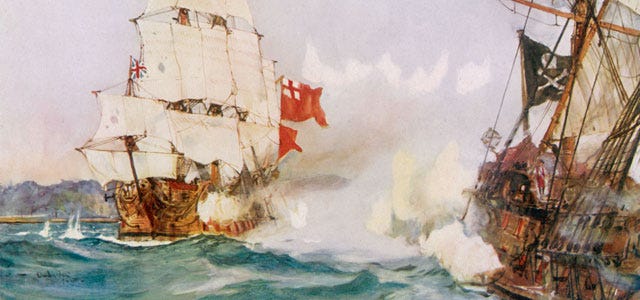
The analogy to founders and businesses is obvious. In his words, “every organization faces the same reckoning. Pirates run on instinct and luck; navies run on structure and intent. The shift from being pirates to becoming a navy is what turns flashes of brilliance into lasting power.”
But how is this done?
McEntush points to companies like SpaceX, Apple, and Microsoft as success stories given each established clear doctrines, focused on how decisions were made, prioritized merit over seniority, learned continuously, and made sure every team member knew why the “work always matters.” Yet, he also argues that this logic applies to nearly every business that is trying to grow, which means most.
WARREN BUFFETT’S FAREWELL LETTER — Berkshire Hathaway (Link)
The greatest investor of all-time is “going quiet.” On Tuesday, Buffett used this letter to announce he will no longer be writing Berkshire Hathaway’s annual report or leading its annual meeting in Omaha in early May.
More importantly, Buffett writes about his life, his career, and the people that touched both. He talks about being grateful to be alive after a brush with death when he was eight years old and thanks his doctor, Harley Holz, for his care. He also thanks his long-time partner, Charlie Munger, his friends, family, and colleagues, as well as the next generation of Berkshire leaders. All the while, he recounts stories from his life and highlights the lessons he has learned along the way.
Amazingly, Buffett only spends three short paragraphs (162 words) discussing Berkshire Hathaway’s stock performance and future prospects. Yet despite how good these few paragraphs are, they pale in comparison to his concluding section titled “A Few Final Thoughts” which reads,
“One perhaps self-serving observation. I’m happy to say I feel better about the second half of my life than the first. My advice: Don’t beat yourself up over past mistakes – learn at least a little from them and move on. It is never too late to improve. Get the right heroes and copy them. You can start with Tom Murphy; he was the best.
Remember Alfred Nobel, later of Nobel Prize fame, who – reportedly – read his own obituary that was mistakenly printed when his brother died and a newspaper got mixed up. He was horrified at what he read and realized he should change his behavior.
Don’t count on a newsroom mix-up: Decide what you would like your obituary to say and live the life to deserve it. Greatness does not come about through accumulating great amounts of money, great amounts of publicity or great power in government.
When you help someone in any of thousands of ways, you help the world. Kindness is costless but also priceless. Whether you are religious or not, it’s hard to beat The Golden Rule as a guide to behavior.
I write this as one who has been thoughtless countless times and made many mistakes but also became very lucky in learning from some wonderful friends how to behave better (still a long way from perfect, however). Keep in mind that the cleaning lady is as much a human being as the Chairman.
I wish all who read this a very happy Thanksgiving. Yes, even the jerks; it’s never too late to change. Remember to thank America for maximizing your opportunities. But it is – inevitably – capricious and sometimes venal in distributing its rewards.
Choose your heroes very carefully and then emulate them. You will never be perfect, but you can always be better.”

Thanks for sharing, definitely up my alley! Any good book recommendations?