
MADNESS

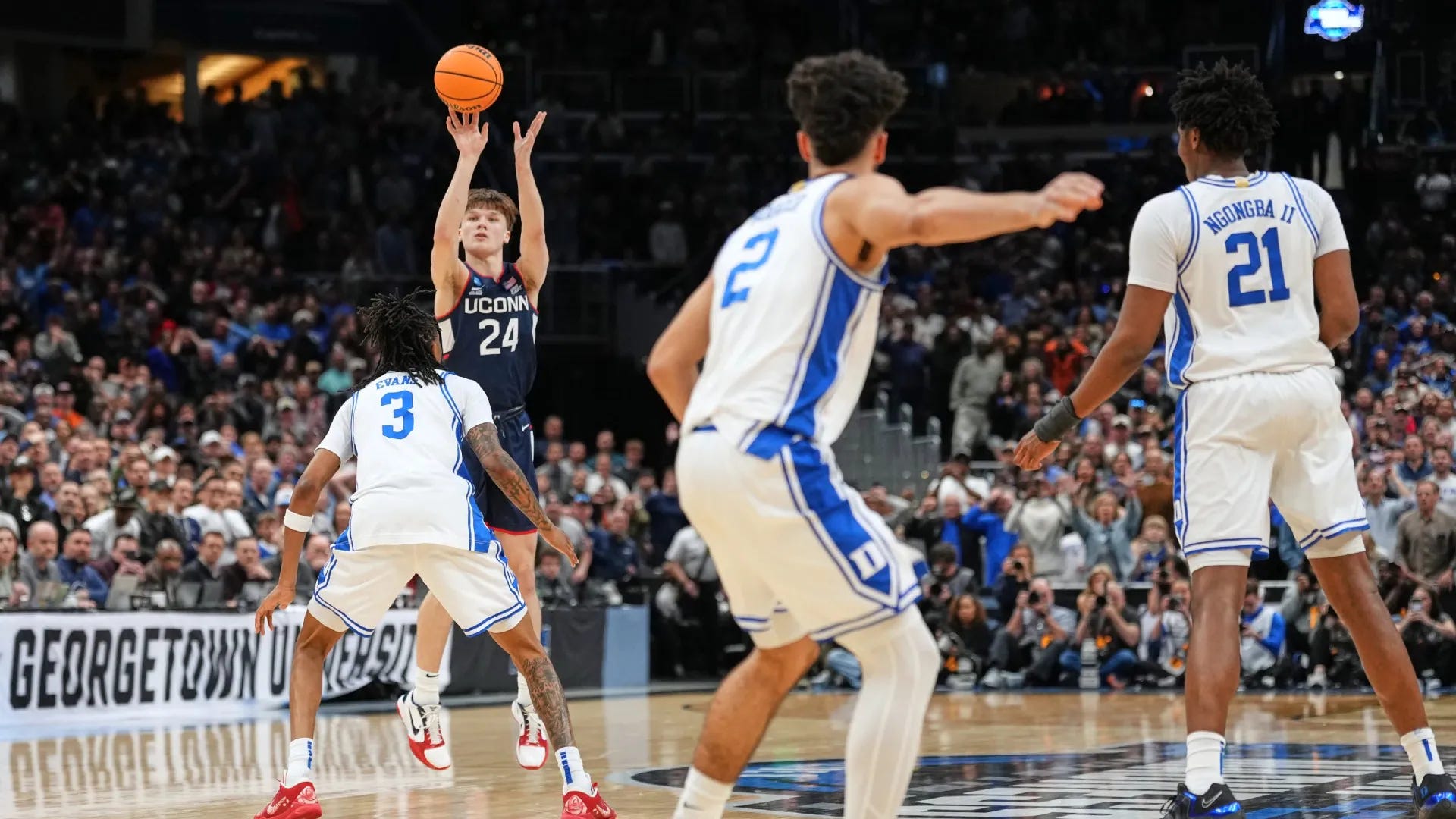
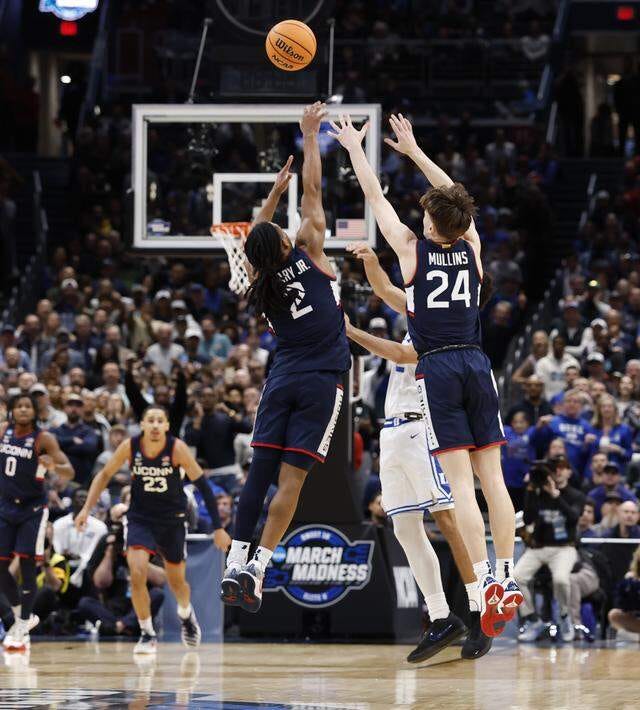
Despite “Hail to the Victors” echoing through Lucas Oil Stadium’s rafters on Monday night after Michigan won the 2026 National Championship, the Wolverines likely won’t be the story of this year’s March Madness. Duke will be. More specifically, how the Blue Devils squandered a sizable lead in the NCAA tournament for the second year in a row, this time in the Elite Eight.
Immediately in its aftermath, pundits, Twitter trolls, and Duke fans with itchy typing fingers (and likely after a few beers) began questioning head coach Jon Scheyer. Some even called for him to be fired.
To make it worse, this meme circulated far and wide.
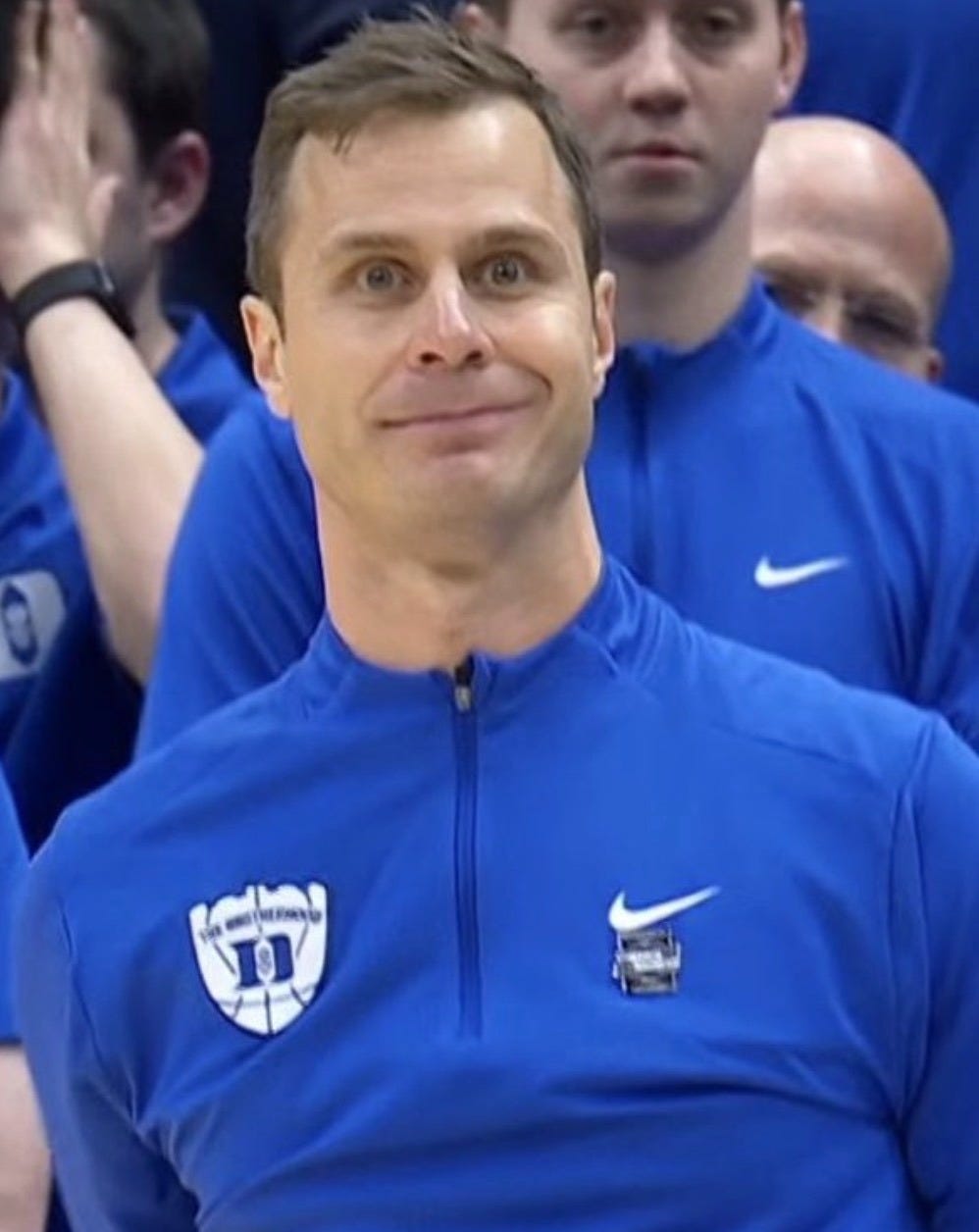
Despite having a remarkable record of 124-24 in four seasons in Durham, a winning percentage of .838, an 11-4 record in the NCAA tournament, two Elite Eights, and a Final Four appearance, this apparently just isn’t good enough.
Rational?
Of course not.
Last year, Scheyer’s freshmen-heavy squad had an upperclassmen-led Houston team on the ropes. Meanwhile, his squad this year was just a few inches away from another trip to the Final Four. Not to mention, he is in just his fourth year as a head coach.
But this begs a few questions — How long should Duke fans give Scheyer? When should their patience run thin? Five years? Seven? Ten?
Before you answer that, consider this.
What if I told you that these all-time coaching legends — Dean Smith, John Wooden, Mike Krzyzewski, Adolph Rupp, Rick Pitino, Jay Wright, Roy Williams, Bill Self, and Jim Boeheim — took an average of 19 years before winning their first championship?
The shortest?
Krzyzewski at 11 years, but he also missed the NCAA Tournament in his first three seasons. So, with the knives out for Scheyer after two Elite Eights and a Final Four in four seasons, would the modern day Cameron Crazies and others have been calling for Coach K’s head?
Quite possibly.
How about the longest?
Boeheim at 27 years.
Yet, Boeheim was treated like a god in upstate New York because he kept the Orange competitive year-in and year-out, consistently made the NCAA tournament, and regularly competed for Big East titles. Yet, in this day and age, would Cuse fans have the patience to wait nearly three decades for a title?
Maybe, but I doubt it.
So, what happened?
At some point along the way, our perception of success changed. Our definition of failure morphed. And our expectations fell out of whack. In short, we have become a “what have you done for me lately” society, arguably on steroids.
Unsurprisingly, this mindset doesn’t just show up in sports—it’s everywhere
Due to instant access to information and a rising desire for immediate results, we have all fallen victim to this dynamic. After all, when we witness Indiana football rise from a doormat program to a National Champion overnight or companies like OpenAI and Anthropic go from nothing more than a concept to $500+ billion in value in just a few years, shouldn’t we all demand similar results?
I don’t believe so, because these are the exceptions and not the rule. The trouble is they are being treated as anything but. As a result, modern day fans have outrageously unreasonable expectations, voters expect politicians to improve their lives overnight, CEOs believe AI will transform their companies’ productivity in an instant, and many employees demand higher pay along with better work-life-balance.
Meanwhile, investors might be the worst offenders of all by expecting and demanding outsized returns across all time periods and market conditions. Oh, and they want it with lower volatility and less downside as well
But what if a fund or company doesn’t provide the “alpha” investors expected?
Most will just move on to another fund or company they think can. Just look at the average holding period for a US stock over the past fifty years.
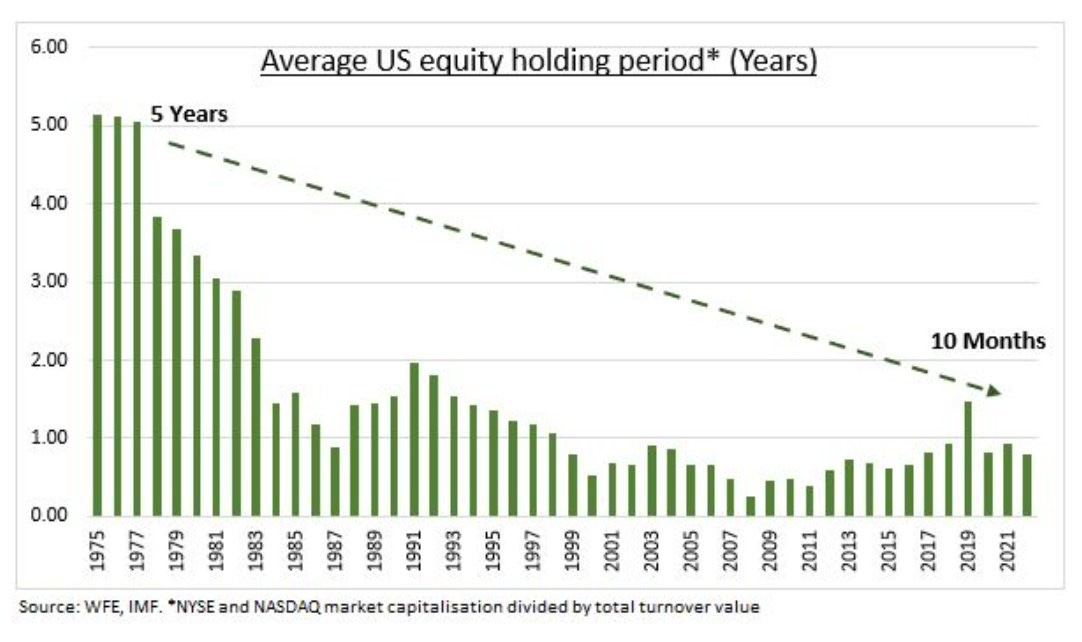
Sadly, things like patience, discipline, and durability just don’t seem to carry as much weight as they used to. As a result, we are pitched and promised instant gratification, highlights, and immediate outperformance.
From get-rich-quick schemes to magic diets to performance enhancing AI-related technology to radical coaching turn-arounds, we are constantly being fed what we want to hear.
We shouldn’t be surprised though. After all, as I was once told, “If the ducks are quacking, feed em.” And today, the ducks are quacking more than ever.
My two cents?
For sports fans, when you find yourself overly critical of your favorite team or coach, ask yourself:
Are we consistently in contention for the playoffs/tournament, and therefore a title?
Am I proud of the way we play?
How confident am I that the alternative will be any better?
For investors, when you’re looking to invest in a fund or company, or with an investment advisor, ask yourself:
Am I being sold or does the fund, company, or firm sell itself?
Are they promising exceptional short-term returns or preaching discipline and durability?
Do I trust them?
Patience, discipline, and durability are what made coaches like Coach K, Dean Smith, and Jim Boeheim legends, but a vastly under appreciated contributor to their success was the fact that their fan bases possessed these qualities as well. The same could be said for the relationship between Warren Buffet and Berkshire Hathaway shareholders, or any great investment partnership for that matter.
Today, in a world in which everyone is seemingly in a race to the bottom in search of instant gratification and immediate success, play a different game. Extend your time horizon. Exercise some patience. Place a premium on durability.
“I know one investment manager who is extremely smart and capable. I asked him ‘what returns do you tell your investors you will earn for them?’ He responded, ‘20% annually.’ I couldn’t believe it because he knows that is impossible and I told him that, to which he said, ‘Charlie…if I told them a lower number, they wouldn’t give me any money to invest.”
- Charlie Munger
Very astute article! In this world in which we live with immediate gratification, how can we teach people to be patient? Taffy B
As a Husker fan, I finally feel I can comment on a March Madness post! That said, Nebraska is mostly known for football. Our most revered coach, Tom Osborne, went 22 years before winning a National Championship! (Then he won 3 in 4 years.) Since then, we've been chasing the latest hot coach and spending millions on buyouts hoping for a quick fix.
I feel like patient investors should be able to take advantage of the madness caused by short-term investment thinking, but seems the last few years in particular the market has remained more irrational than patient managers could remain solvent. Don't even get me started on pod shops.